When I was in grade 9 or 10 in the early 2000s, we were asked by my drama teacher to bring in a picture of someone we admired. Lots of people brought great thinkers and thespians and relatives. I brought a pic of Stan Lee. At the time, I was a comic-crazy teenage boy for whom the Marvel Universe was everything, and from what I knew — which was a lot — pretty much everything I loved had emanated from the mind of the then-septuagenarian Lee.
This was in the days before Iron Man and Captain America had conquered the big screen. Spider-Man was more famous to my friends as the star of a 1990’s series with a kickass Joe Perry talk-box theme song. Marvel was not yet ubiquitous, but in time it would be, and so would Stan by virtue of his many memorable cameos. As Danny Fingeroth, the writer of this biography points out, a lot of average moviegoers don’t exactly know who Stan Lee was or what he did at Marvel, but it must have been important, because there he is, Smilin’ Stan, his name front and center, making those appearances, being the genial grandfatherly figure mingling with many creations that, one assumes, belong to him.
Well, yes. And no. And kind of.
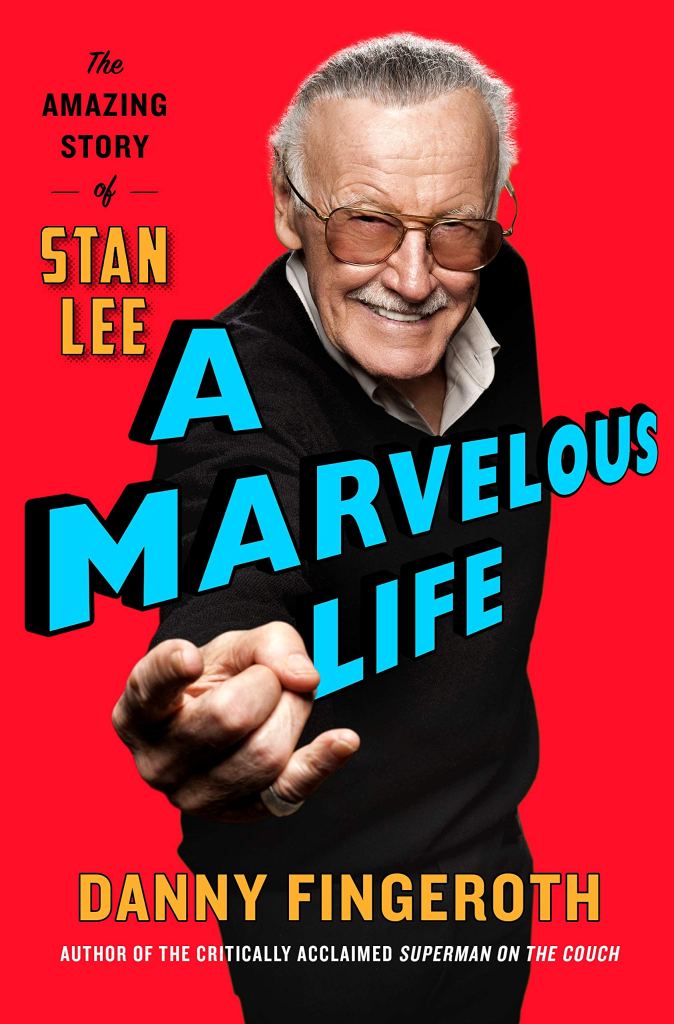
Part of growing up as a Marvel fan is, at some point, learning that it’s a lot more complicated than “Stan Lee created the Fantastic Four and the Avengers and Spider-Man and all the rest of them.” Stan credits himself as the writer of Marvel Comics, and to people who know little about how comics are made — even if they know a good deal about other forms of creativity — might imagine something like a novelist or a screenwriter, pecking away at a keyboard to create some kind of script for their collaborators to follow. In that imagined scenario, all that brilliance flows from Stan Lee’s mind into the hands of artists like Jack Kirby and Steve Ditko who then make it real on the page in a subordinate role.
That’s generally how it worked at other comic companies, such as DC where Batman and Superman are produced, but under the “Marvel” method, Stan — the only “writer” of Marvel Comics for several years — would provide artists with a synopsis, an outline, or perhaps even just a prompt, leaving them to figure out the particulars on the page. This resulted in an inordinately large storytelling responsibility for those drawing the comics, who became de facto co-writers in the process. (Stan would then — after requesting any necessary revisions — provide dialogue and narration to flesh out the action for readers, in his own inimitable voice of course.)
Using terms like “Writer” and “Artist” are convenient enough labels to delineate the division of labor, but conveys to the reader a perhaps inaccurate idea about where one job ends and the other begins. As Steve Ditko pointed out throughout his life, there wasn’t a “Spider-Man” until an artist — himself — took Stan Lee’s synopsis and gave it form. He wasn’t adapting, say, a literary character like Sherlock Holmes or anything that had been fully envisioned. The Marvel heroes were basically ephemeral until they made it to the page and began to take on their extraordinary lives.

For the most part, this is a really arcane topic that is of little practical use to your day-to-day life. It’s easy enough to say “Stan Lee wrote the comics, someone else drew them” and not think about how drawing is writing in this arrangement. But to be honest about Stan Lee’s life, work and legacy, it’s important to unpack it at length.
Danny Fingeroth’s book impressed me with the way it approached this subject, this quaint but real controversy. It’s the duty of a biography to take a stance on its subject: usually fawning and complimentary, downplaying complications that might diminish the accomplishments (real or exaggerated) of the subject. Fingeroth — a longtime comics pro who had also made many appearances at conventions with Lee, and so knows wherefrom he speaks — is canny enough to know that Stan Lee’s legacy can withstand some level of scrutiny and approaches it head on. In this realization, the story of Stan Lee is also the story of Marvel Comics, which makes it also the story of Jack Kirby and Steve Ditko and the rest (if not their lives then certainly their work.) They are very much part of the narrative and are afforded a rich amount of credit in those pages.
As a youth, Stanley Martin Lieber was a scrappy go-getter but also seemingly a dilettante and dabbler, someone whose abundant energies always seemed to be firing off in a multitude of directions. Maybe, he thought, he’d be an actor or a lawyer, or a writer. He wound up in the comics — basically a third-rate adjunct of the publishing industry in the 1930’s — because he had a relative, Martin Goodman, who was a publisher. Seemingly through endurance, Stan wound up as the editor of the comic book line, a position he retained for over 30 years.
By the time what we now know as “Marvel Comics” came into being, Stan was nearly 40 years old and a twenty-year veteran of a comic book industry that had been rocked by boom and bust, mostly publishing interchangeable monster comics and Twilight Zone-esque anthologies and chasing other trends. By this time, Stan had tried to branch out and find work in other fields, including comic strips (like Mrs. Lyons’ Cubs and Willie Lumpkin, who later appeared in the Marvel Universe) and funny caption books, but always seemed to have to stick with the comics as his most consistent outlet and source of income.
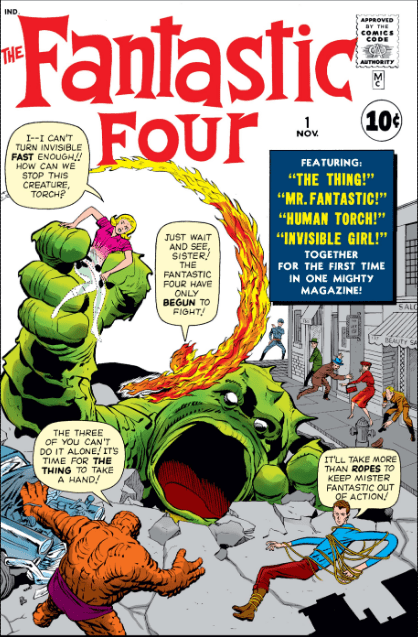
The creation of the Marvel dynasty then wasn’t some long-germinating boyhood dream, even if Stan had claimed to want to write great novels or movies at one point or another. It was just the latest business move. Legend has it that Stan was requested by Goodman to emulate the success of DC’s Justice League with a team of superheroes. That prompt begat the Fantastic Four, whose first hundred issues were drawn by Jack Kirby. Spider-Man, the various Avengers, the X-Men. (Captain America, Namor, and a few other less-remembered heroes hail from prior to this period — the inital big bang of superheroes circa World War II — and were not originated by Stan Lee.)
For whatever reason — boredom from years of doing repetitive sci-fi schlock, dislike of the flavorless babyface heroes DC peddled, or simply doing what came naturally — the Marvel heroes were all imbued with a level of humanity that other comics heroes lacked. They were imperfect. They griped, they bickered, they had problems and neuroses. They were disliked by the masses in-story. There was a distinct flavor to the incipient Marvel Universe that caught on. Can we say with certainty that that was the Stan Lee touch? He was, after all, the one putting the words on the page. Maybe he was following the lead of the material Kirby and Ditko were drawing, or maybe all these creators were somehow aligned in an ineffable, alchemical way that produced magic. The fog of history makes it impossible to know for certain who did what, how and when and why, only that it was done and we have the stories to prove it.
Most of these men had worked for years in comics with varying levels of success, but that success was measured more on longevity and durability than by creating the next Batman or Superman. Nothing they had done, separately or together, had the same wow factor up until now (Kirby and Joe Simon’s Captain America was a phenom for a time, but his star faded after the war.) So it’s unlikely any one of them was destined for greatness while the other hitched on to the coattails. Somehow, together under these circumstances, things just clicked, and kept clicking for a very long time.
There are a few things we know came from Stan Lee for certain. One is the line “With great power there must come… great responsibility!” which has become synonymous with Spider-Man and seems to sum up the double-edged sword of being a Marvel hero: the freedom and the burden. Steve Ditko, who drew the story and gave Peter Parker his outsider credibility, famously disowned the line as being too heavy for kids, but it fits snugly with Stan’s semi-moralistic, pseudo-Rod Serling approach taken in many comics he is credited as writing. From there we can interpolate that a lot of the things we love about the heroes came from him, but even if not, even if it were just that one thing, it would have left an indelible mark on comics and culture.

Perhaps the most notable creation Stan Lee can claim credit for, however, is Stan Lee himself. As Fingeroth emphasizes, through communication with the reader, Stan created a voice and character for himself as the representative of Marvel Comics, giving spirit and life to the entire publishing endeavor that people could connect with and feel part of. Readers were invited to correspond with the man himself, and he sounded off in dedicated pages so that fans felt they knew him, and through him, the others who made the comics. As much as the heroic origin stories and outer-space/interdimensional adventures (many of which surely were dreamed up by Kirby or Ditko) that is a huge part of what people responded to at Marvel Comics in the 1960’s, and intermittently throughout history.
To put it in somewhat insidious terms, there was a whole cult appeal of Marvel Comics, with Stan Lee as the leader, placing himself as the head of the organization. Fingeroth’s narrative traces what Stan ultimately did with his position, once he had developed a voice that people would listen to, lightly dusting comics of the late 60’s and early 70’s with social commentary and ideals of justice that went beyond foiling bankrobbers with your fists — a noble pursuit, to be sure — to one that bears out that whole thing about power and responsibility.
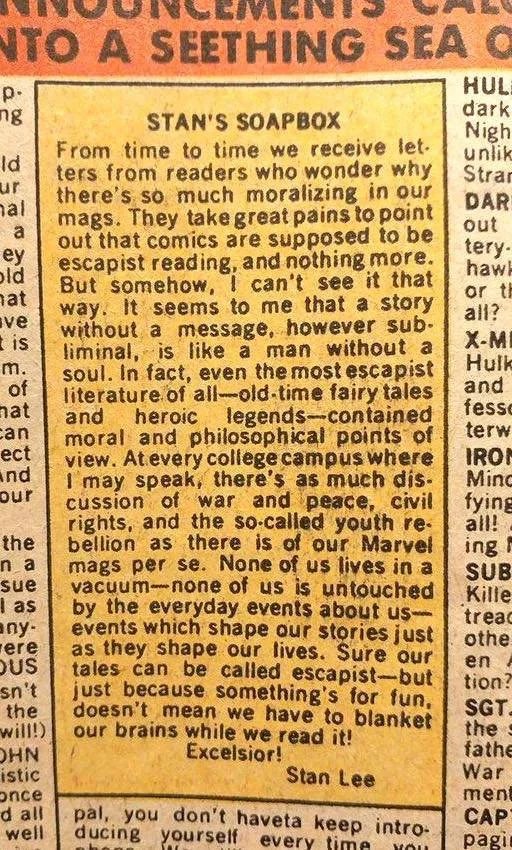
Was Stan Lee a credit hog, shouldering his collaborators aside to aggrandize himself? There’s an argument to be made that the only reason Marvel existed and grew to immense proportions was because Stan puffed himself, and it, up, with his only true talent, self-promotion. As far as credit goes, Fingeroth mentions that it was Lee who invented the idea of putting credits into comics, so that readers knew who was making them, to begin with, and he was not shy about praising the people he worked with. Previously, comic companies liked to keep their contributors anonymous, for various reasons (the illusion of consistency, prevention of artists gaining “name value.”) It’s only possible to argue that people aren’t getting enough credit when they start getting credit at all.
Comic creation is a strange, nebulous thing. On the one hand, it’s easy to point to who did what job. Nobody’s really disputing whose labor resulted in the production of individual booklets of cheap paper stapled together. In this case, a writer/editor gave a synopsis to an artist who handed back penciled pages for dialogue to be written onto. It was inked, lettered and colored, and voila. The real question is how did an empire get built out of those comics? On the backs whose ideas does Marvel Comics, the juggernaut that has spilled into a cinema-conquering behemoth, stand?
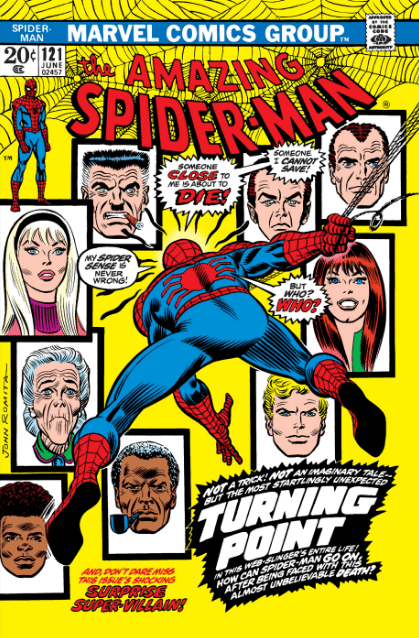
Ultimately, assigning credit is inherently unfair. Comic characters persist forever under the auspices of their corporate owners. They are eternal works in progress. You can look at Marvel Comics — on the page or on the screen — and be in awe of the fact that all of this is because 65 years ago, Stan Lee took a note from his boss Martin and ran with it, or Jack Kirby took a note from his boss Stan, and ran with it. But comics don’t stop at the point that characters are created. The stories of the Fantastic Four were credited to Lee & Kirby for just over 100 issues: isn’t the work that was done during that time just as important as that initial spark of creation? Who was responsible for each bit of it? And what of the issues of Spider-Man that credited Steve Ditko as plotter as well as artist, before he departed? And then you start to get to parts that weren’t created by either man, that were added later by other writers and artists: Gerry Conway, who wrote the issue of Spider-Man where Gwen Stacy died (which keeps happening, or being teased as happening, in seemingly every iteration of Spidey’s story.) Chris Claremont, who took Stan and Jack’s original idea for the X-Men, along with characters created in the interim, filtered through his editor and predecessors, added his own vision and those of his artistic partners, and made it into the top selling book of the 80’s. Brian Michael Bendis, who helped re-invent Spider-Man for the 2000’s, first by retelling Peter Parker’s story, then by sliding Miles Morales — star of the Spider-Verse films — into it. Dan Abnett and Andy Lanning, who collected various unwanted stray characters into the Guardians of the Galaxy. G. Willow Wilson and Adrian Alphona, who gave us Kamala “Ms. Marvel” Khan… and on and on. The comic universe is made by many hands over many years.
It all does go back to Stan, of course, but beyond him, it goes to Marvel itself. Neither Stan nor Jack, nor their estates, nor any other one person, has an ownership stake in the Marvel superheroes. They are all owned by Marvel, which is owned by Disney. Debating who did what is in some ways important and in some ways academic (ie, moot) because in the end there’s no money in it anyway. Like Jack, who officially worked as a freelancer for most of his life, Stan’s only reward for creating the Marvel Universe was continued employment, in his case as editor and later chairman emeritus, a gesture that signified his place of importance in the history of Marvel without conceding that he — or anyone else — made it all for them. In a strange way, he made Marvel, so that Marvel could make him, so that he could make Marvel. But he never owned any of it.
There are those who insist, as Jack Kirby sometimes did when he was feeling combative, that Stan wasn’t a creator at all. “The only thing Stan wrote was the credits.” That’s probably overly harsh, and as much respect as I have for Jack, I don’t think anyone with a reasonable grasp on the situation agrees that to be the case. Jack Kirby didn’t arrive at Marvel with a finished copy of Fantastic Four #1 in hand, telling Stan Lee all it needed was dialogue. Steve Ditko didn’t dream up a kid in a crazy spider outfit. It was all collaborative, and the nexus of that collaboration seems to have been Stan Lee.
Whether Stan ever had any good, usable ideas, without any input from anybody else, we can’t know. We know his comic strip efforts, usually with the late Joe Maneely (who might have been Jack Kirby in a world where he didn’t die tragically young in an accident) didn’t pan out. We know his screenplay was never produced, nor did he write proper “novels.” However, it’s clear that he saw it as his job to create more than simply administrate or market the comics. He latched onto the Marvel character Silver Surfer — who was interjected into a Fantastic Four story by Jack Kirby in a fit of inspiration — as being his favored avatar, to the point where he guarded the job of writing him jealously. Some of the works he produced using the character — one graphic novel with Kirby and one with French artist Moebius — reveal a serious thoughtfulness about the character and about humankind in general. Someone who didn’t take their role as a “creator” seriously couldn’t have produced something like that, wouldn’t bothered to have.
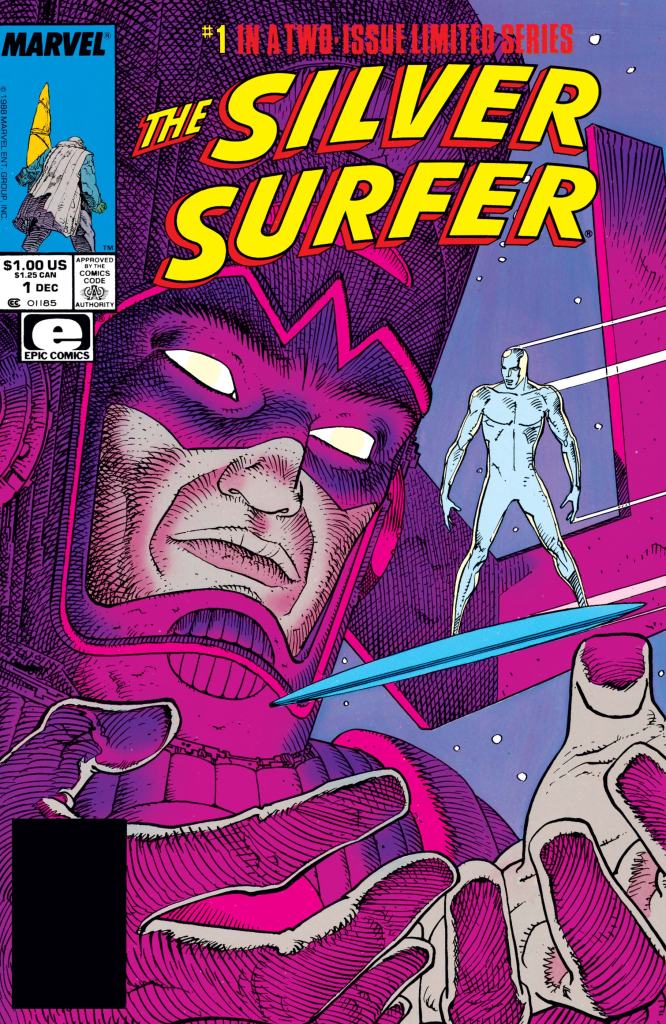
Nor would they have kept as busy as Stan did. Did he need to contribute the super-powered garbage man Ravage to Marvel’s 2099 imprint (imagining the world of a century later?) Did he need to take up the challenge of re-imagining DC’s characters for his “Just Imagine” project, or lending his name and assist to a wide variety of projects — both actual and proposed — in his twilight years, ones that he preferred to promote rather than be interviewed about past glories? Whether he carried the deep, innate creative abilities of Jack Kirby (whose accomplishments without Stan Lee are formidable, if not quite as robust as those with Stan) or was simply a good promoter with an eye for talent, it’s clear he cared and he deployed whatever abilities he had judiciously.
Watching the videos he produced in the mid-90’s where he interviews other creators such as Rob Liefeld and Todd MacFarlane, interrogating their design as they sketch a hero on screen for him, he has a give-and-take with the artists that show not only his panache for Vaudevillian zingers, but a writer-editor’s curiosity and insight — forever a pro.
The question of superhero origins is the main axis on which Stan Lee’s biography turns. As a tale of a man writing himself into existence — a true American success story if there ever was one — it’s otherwise devoid of scandal. Thankfully, Stan’s legacy isn’t marred by substantial revelations — as far as we know — that he was a pest or an abuser. It appears he was pathologically devoted to his wife Joanie, after whom he modeled many characters. That he achieved legendary status seemingly without harming anyone in any traumatic or legally actionable way (although there were some questionable instances alluded to during his final years) seems like a low bar to clear for admiration, but it’s valid. I’ve seen how bad some of my former favourite creators — in comics, movies and music — can be.

Several years ago, they made a movie about PT Barnum called The Greatest Showman, which posited that one of history’s greatest con artists and charlatans was just a good old fashioned entertainer with an egalitarian world view. If you rewrote that entire movie to be about Stan, you might have something more honest, as the story of gathering together misfits — folks who had drifted into comics not out of love but out of desperation and inability to do anything else — and marshalled his ability to get peoples’ attention into something greater than the sum of its parts. Just put a mustache on Hugh Jackman and voila.
In 2025, I have a different understanding of who Stan Lee was and what he did than I did in 2002, in the same way I understand the world differently and as a more complicated place. I don’t value his contributions to the world any less for the complicating factors I now understand, or by propping the hardworking artists at Marvel up alongside him as equally worthy of discussion and remembrance.
Stan Lee was about the age I am now when the first Fantastic Four comic was published, rocket-boosting his already-lengthy career in comics into its second stage. There’s hope there, for me as a person who still isn’t quite sure what I’m going to do with my remaining time on Earth but feels he has more to give. If I was to give a presentation on why I admire Stan Lee today, I might lead with that and let the rest stand as it is. ‘Nuff said.

I write about comics every week at Uncanny X-Cerpts, an issue-by-issue trip through the history of X-Men, now in its ninth year.
Help support this blog by leaving some money in the tip jar at Ko-Fi.

 Scotto Williams - Better Late Than Never Blog
Illuminating! Thanks for this!!
LikeLiked by 1 person