It’s after midnight on a Saturday and I’ve been up a few hours later than my wife, who went to bed early. I’ve been reading, listening to music, playing Solitaire on my phone, generally doing things to engage and amuse myself while I still have waking energy, but I’m just about ready to go to bed. But before I do, I want to offload a thought to you, and this seemed like the venue to do it.
If you like something, it’s good.
Let me back up a little bit. I spend a lot of time in the critical world. I manage an X-Men comic readthrough blog that gets many more hits than this one does. I review whatever movies I happen to be watching on Letterboxd. In the past, I reviewed music on numerous blogs and dispensed other subjective opinions about various media at other venues. I’m 38 years old and I’ve spent more than half of that time yakking on the internet telling people what I think about things. But at the end of the day, I have this cardinal rule that overrides pretty much everything, which I would plaster at the top of every review if I could.
If you like it, it’s good.
Actually, it’s a two-part rule — more of a policy than a rule now that I’m thinking about it — but I’ll get to that later.
At the end of each of my comic write-ups, which are mostly humorous rundowns of the plot events told in a way as to highlight points of interest for comedy, I have a little blurb called “Further Thoughts” where I talk more straightly about the piece. I’ll usually give my opinion on it, and say what I think the comic did well, or not so well. There are obvious points of discussion like plot holes, inconsistencies, leaps in storytelling logic. But there are also other things about the things we take for granted — I look at a story in terms of why am I reading this, was it crafted well (did every contributor fulfill their role capably?), who is meant to buy it, and what does it say about the world around us. The comics I talk about these days are decades old — my complaints aren’t likely to reach the people making them and, unless there’s a time machine involved, play any factor into their subsequent work, nor can they cause consumers from back then to un-buy the product or any further editions. But when I remark on the quality or lack thereof of old comics, I’m trying to talk people into interrogating how they form opinions about what they consume today: is there value to what they’re spending their time and money on? Are they passively accepting it out of habit? As well as (in an ideal world) creators of today: are you serving your audience, are you providing something that will retain them?
I single out comics because it’s such a reactive medium. A movie or a book only gets made after it’s passed a lot of checks and balances, and while that doesn’t always guarantee quality, it certainly means that enough people put enough effort in that the end product is very intentional. Comics — certainly moreso many years ago but still today — are published month after month after month, with many periods simply requiring a product to Get Done in time to fill a deadline, regardless of the content, which may not mean that quality control is nonexistent, but it takes a backseat to completion. That, along with hundreds of other factors that play a role in the creation of a mainstream comic book, means that not all comics are created equal, which makes them a fascinating topic for discussion. But I digress.
(For further testimony to this, check out my write-ups on the 1999 spate of comics plotted by writer-artist Alan Davis, where the remit was literally “Get something done, please” by a seemingly very frazzled editorial team. The results show.)
Earlier today, I saw a post on Bluesky. The prompt was to post “4 comics you love.” The person I follow, who happens to be a fellow X-Men fan, posted four covers, almost all of which were issues that I panned in my write-ups. Ones that simply didn’t meet the criteria for what made a comic good. Some of this is just what I want to see in a comic. Some of it I think is a lack of some very important ingredients. Some is just taste.
I can write until I’m blue in the fingertips about why I think each of those comics was lacking, but what does it matter? That person liked them. Not only would I probably not be able to change that, but I wouldn’t want to. What on Earth would be the point in assassinating someone else’s enjoyment of something, and deliberately?
The point of art and entertainment is to reach people. Whether it’s to provoke an idea or to coax them into spending money, connection is key. It’s rarely universal, and a lot of the time people in a position to think a lot about it don’t see where it happens for the general public. One person liking something — a comic book, an episode of a TV show, an obscure band — is a win for that thing. Chances are, that love doesn’t come from intellectualizing and analyzing it (although I love things that get better the more you think about ’em!) But they’re felt deep in the gut, and that’s something to be rewarded.
Anything I’ve ever reviewed — at least since I hit my 20’s — I came into with some kind of framework of expectations for how it could have worked and been good, and my review is a way to register whether it met that, or provided the reader with something else in lieu. I hope, deep down, people give some thought as to why they like some things (and dislike others,) even if they don’t have those exact same frameworks as me, but in all my hoity-toity philosophizing about comics and other things I study, there are also many times when my ruling is ultimately: “Well, that was just cool.”
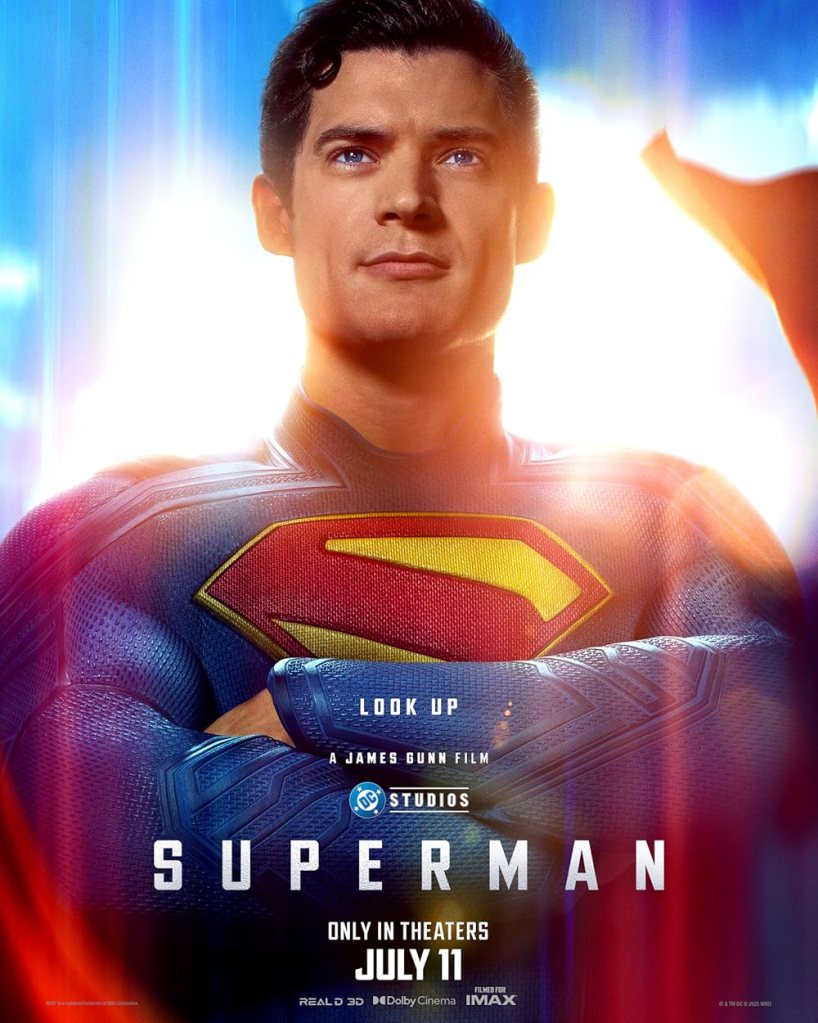
If you like it, it’s good.
That gives you a free pass to disregard naysayers if you so desire. A lot of people rated the 2025 Superman movie by James Gunn a full five stars on Letterboxd. To me it was 3 1/2 stars, indicating a good, regular movie. It didn’t do any more for me than that, which may have to do with the circumstances under which I saw the movie (visiting my wife’s uncle and his twin toddlers) or it may have to do with my thoughts about the movie’s plot and focus on supporting characters. But if you loved it, you saw what I saw and came away feeling different. Which is great.
Because there’s another part of my policy, which I hold dear to my heart when I critique things, which might prove even more controversial than my stance of “liking things is good.” That is…
Disliking a thing is a failure.
All right. Look. A lot of people will feel their teeth clench at that, and start rolling up their sleeves with cocked fists. How, you ask, are you supposed to like everything? Ah, but you’re not. You are supposed to fail to like something sometimes. I didn’t like Grease 2. I failed to appreciate whatever the creators were going for, and I don’t see how anyone could. The world would be a better place if the sequel to Grease were as good as the original, but most who are familiar with the work would agree with me, I think. Disliking things is a failure, and sometimes that failure is right for you.
I keep this in mind, though, because when you write about things that you did not like and think are bad, it’s easy to get carried away. A lot of writers relish the chance to write a pan or a scathing review. You get to use funnier language and make wilder statements about it, especially if a thing is all that bad. It’s a negative impulse that we all have but should do our best to keep at arm’s length. But even so, my saying this doesn’t mean I don’t embrace the fact that I will fail at this sometimes. Only that that’s the necessary flipside of it never being wrong to like something*. Even if that something is Grease 2.
*Special caveat: I’m talking about things that are generally harmless to the world at large and not espousing wholly toxic ideas — and there are times when there is ambiguity to this, but generally, you know what the exceptions are… and they’re out there, but they’re not as numerous as some people might think.
If someone likes something that I didn’t, I do try to become curious what they saw in it that I didn’t. Maybe I’ll end up with broadened horizons, or a better understanding of the other person’s temperament. Or maybe we’ll just walk away agreeing to disagree. There’s that statement I love, that in matters of taste there can be no dispute: you can tell me factually that The Room by Tommy Wiseau disobeys all the laws of cinema, but you can’t stop me from thinking of it as a breathtaking achievement in film.
If I didn’t like something you liked, don’t take it personally. I didn’t understand it the way that you did, and I maybe never will. I promise you, my negativity toward it isn’t a slight at people who feel differently. It’s also not wrong to change your opinion over time. Maybe someday, you’ll revisit the thing you liked and find that it doesn’t hit you the same way, and that it’s somehow lacking what it used to do for you. Maybe that’s the result of becoming more discerning or thinking about the world differently. Maybe it’s because some jerk with a website planted new ideas in your head and changed your entire criterion for what’s good with their negative review of what you liked. That may happen from time to time in your life, but nothing can take away the joy you once felt, when you were the person who liked it.
Broadly speaking — and now we’re stepping way outside “what movies are good” — I’m for love, compassion and understanding, and against hate, especially where society is concerned. Sometimes in life it’s necessary to hate, to dislike, to criticize, hopefully to make things better. I’m against the hate that likes hating, that wants to hate more and that wants to put that hate into hateful action against others. I know I’ll never be fully rid of it myself, but knowing it’s not something I like doing or being, helps.
Sorry if this is insanely vague or nonsensical. It’s almost 1 AM at this point and I really should rest. I have a whole day of overanalyzing tomorrow.
Help support this blog by leaving some money in the tip jar at Ko-Fi.

 Scotto Williams - Better Late Than Never Blog
I can’t wait for If You Like it, It’s Good 2! Love it if you spun more thoughts on the seduction of hate in media.
I find that it’s always a challenge to get to what you really like — to sift through all opinions that worm their way into your consciousness and feel what you really feel. Virgin readers/viewers are so rare! When I really like something (like the movie Rental Families) it’s most often something I know very little about. Recently I saw the movie Sincerely Yours and disliked it — was shocked to hear what a success it is. Made me question myself. 🙂
LikeLike
This is where stores with dedicated staffs used to come in handy. “You like X? It’s a lot like Y!” Algorithms can only go so far because they know what people are trying, but not much about how they’re responding to it. The “Because You Watched…” and “More Like This” feature on Netflix are very hit and miss. I swear, if only that could still be my job… 😡 (And I could be paid decently for it.)
The feeling of being very surprised by something you like is rare indeed, and precious. I only have a handful of critics I read before I’ve seen a thing, and I never check what the general public thinks until after I’ve experienced it myself, if I can help it. After all, every possible opinion has probably been expressed by somebody, so there’s no point in trying to sift through the noise.
LikeLiked by 1 person